Tyler Bricks

Tyler's brick streets

The bricks are of three types no longer manufactured, so repairs draw on stockpiled bricks,1 and utility crews must lift old bricks one by one and stack them for city workers to lay again.2

about 12.6
million
bricks

in 13.8 miles of brick streets, the city's 2015 count.1

Made

1897 to 1930 or 1931, at Thurber

Tyler's paving brick came from the Thurber Brick Co. and the Mineral Wells Brick Co., with some from the local Tyler Brick Co., which paving contracts saved from bankruptcy.3

Thurber's plant, in Erath County about 75 miles west of Fort Worth, began making vitrified paving brick in 1898, and by 1911 it made nothing but pavers.4
Where the bricks came from

Laid

Early 1900s into the 1940s

The National Register nomination dates Tyler's first brick paving to 1906, at the railroad crossings, in red brick from Thurber; another account puts the first brick streets around 1912.56 A 1925 bond added 15 streets,7 and the last brick went down about 1942 in the National Register’s account, or in 1947 by the city’s figures.8

In 2013, City of Tyler planner Heather Nick told KLTV that the streets were built “predominantly by African American men.” A city film shows the crews laying bricks assembly-line style in real time.9

The timeline Who laid them

Kept

2004 to March 2026

The Brick Streets Neighborhood Historic District was listed on the National Register in 2004: 29 blocks about half a mile south of the original town square, where all or part of 11 of its 14 streets kept their original red brick paving.10

In September 2025 crews took up every brick on College Avenue between Ferguson and Erwin streets, palletized them and stored them.11 On March 2, 2026, bricks saved from the streets went back down on College Avenue in front of Plaza Tower.12

The lift, step by step

In the maps’ own words

Five of the fire-insurance maps the Sanborn Map Company drew of Tyler, now at the Library of Congress, carry a line about the streets.

See the five maps

  1. September 1907: Grades generally level. streets not paved.13
  2. February 1912: About one mile of brick paved streets.14
  3. August 1919: Streets in business section mostly paved with brick and asphalt.15
  4. March 1928: 18½ MILES OF PAVING16
  5. 1938: Paving:—About 37 miles.17

The streets, 2016

Nine years before the downtown lift.

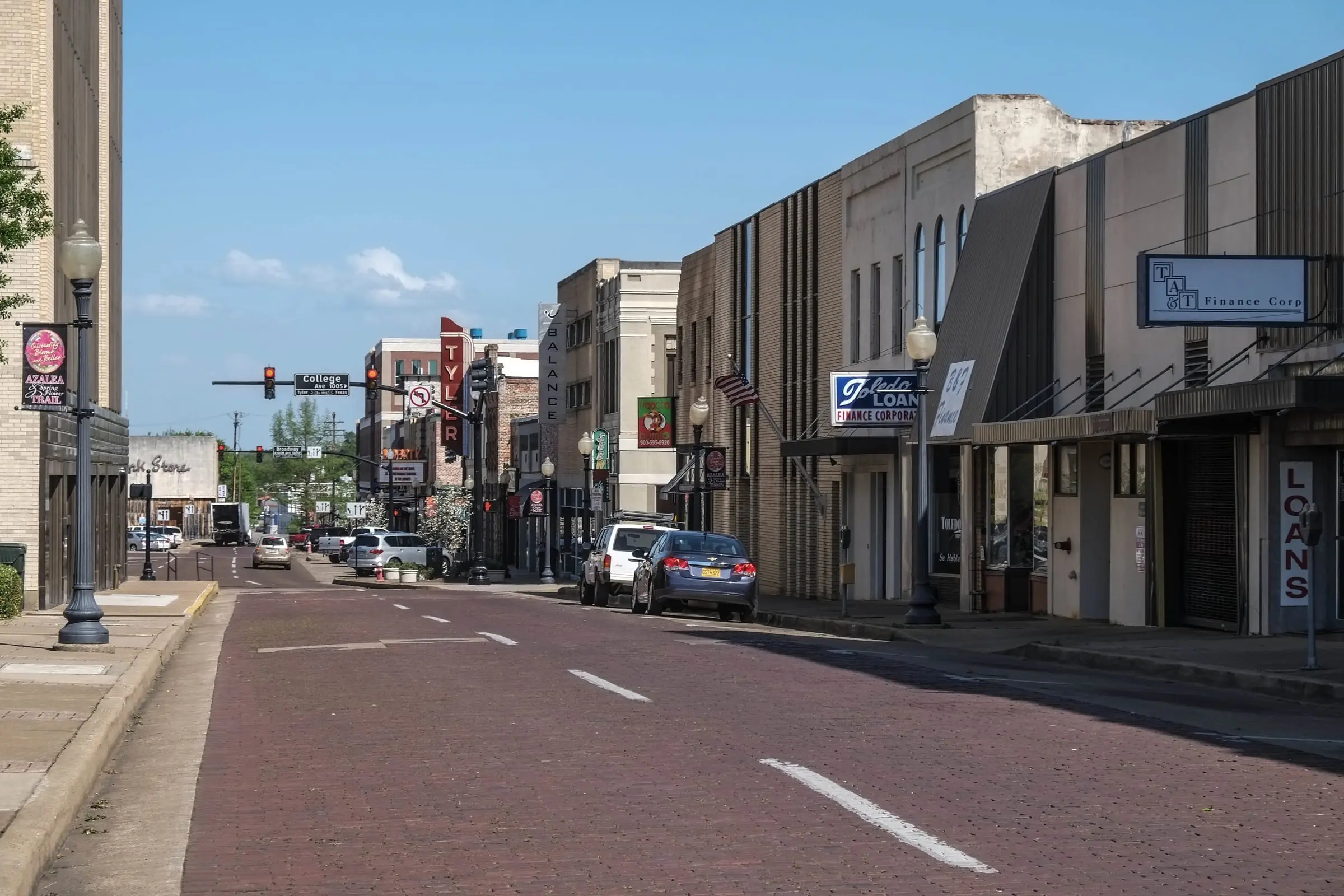
A long downtown avenue paved in dark red brick, with white lane lines, storefronts and a vertical sign reading TYLER in the distance.
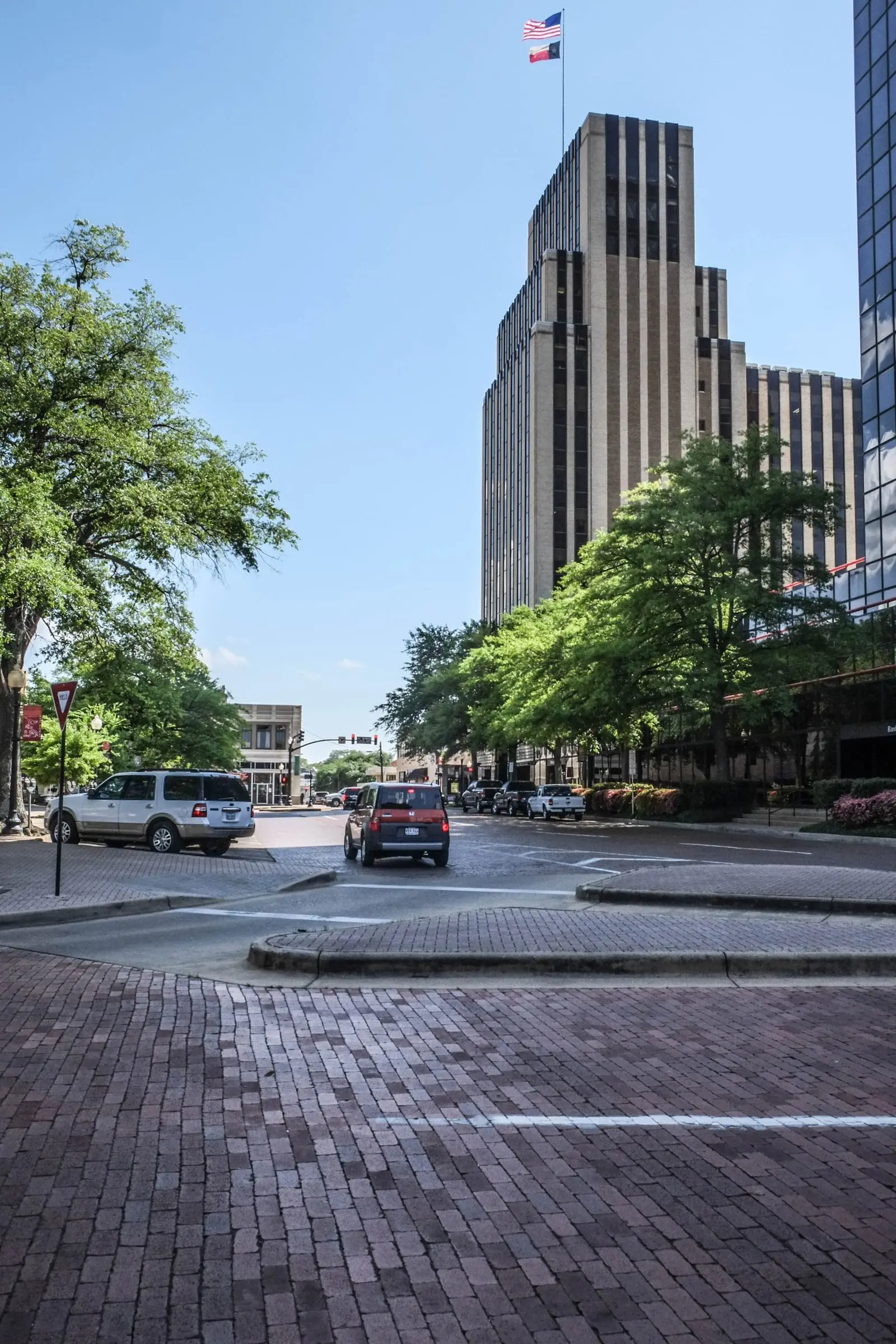
Worn brick paving in the foreground, a curb island and a street, with a tall stepped Art Deco tower above the trees.
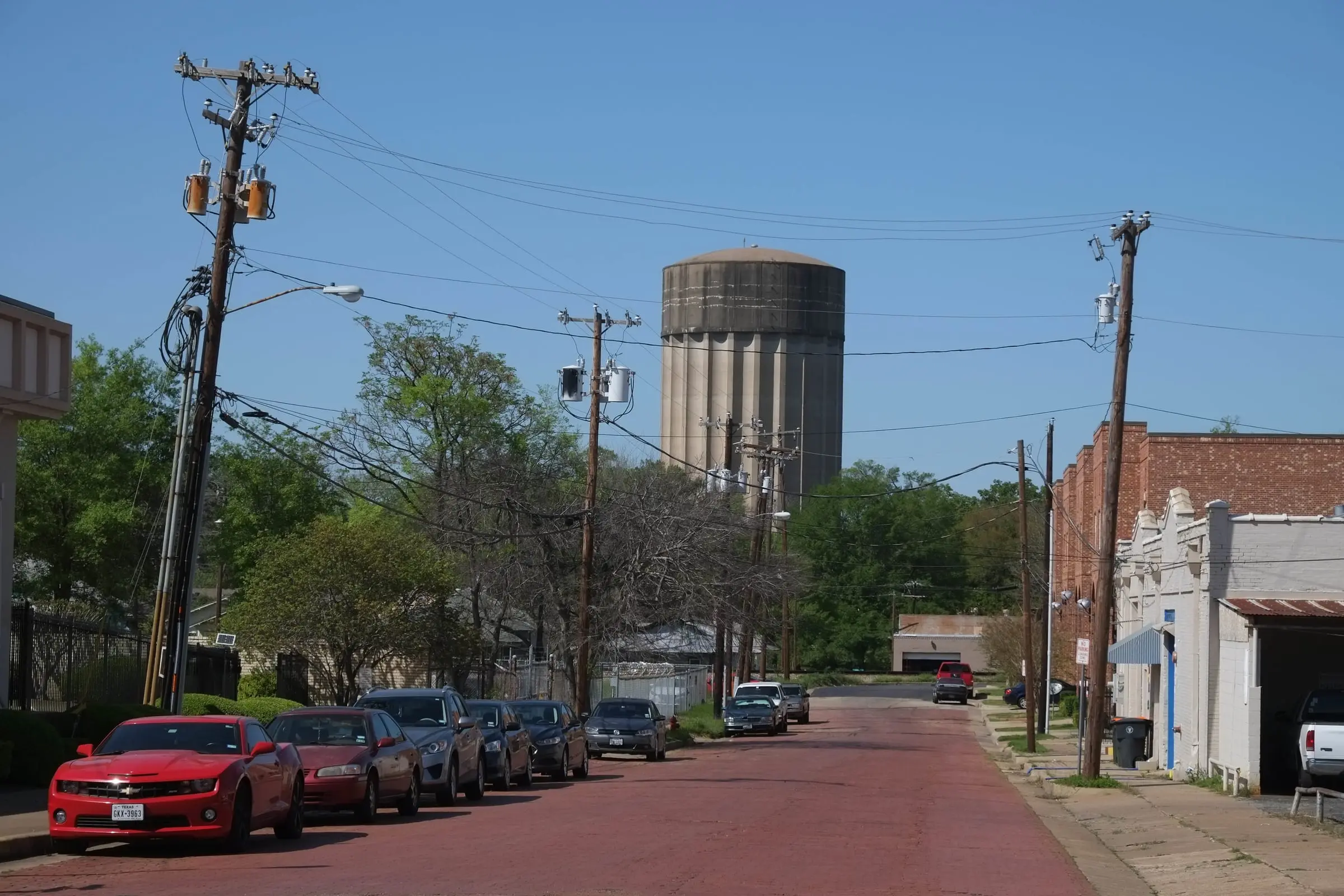
A brick-paved street running uphill between parked cars and utility poles, with a concrete water tower beyond.
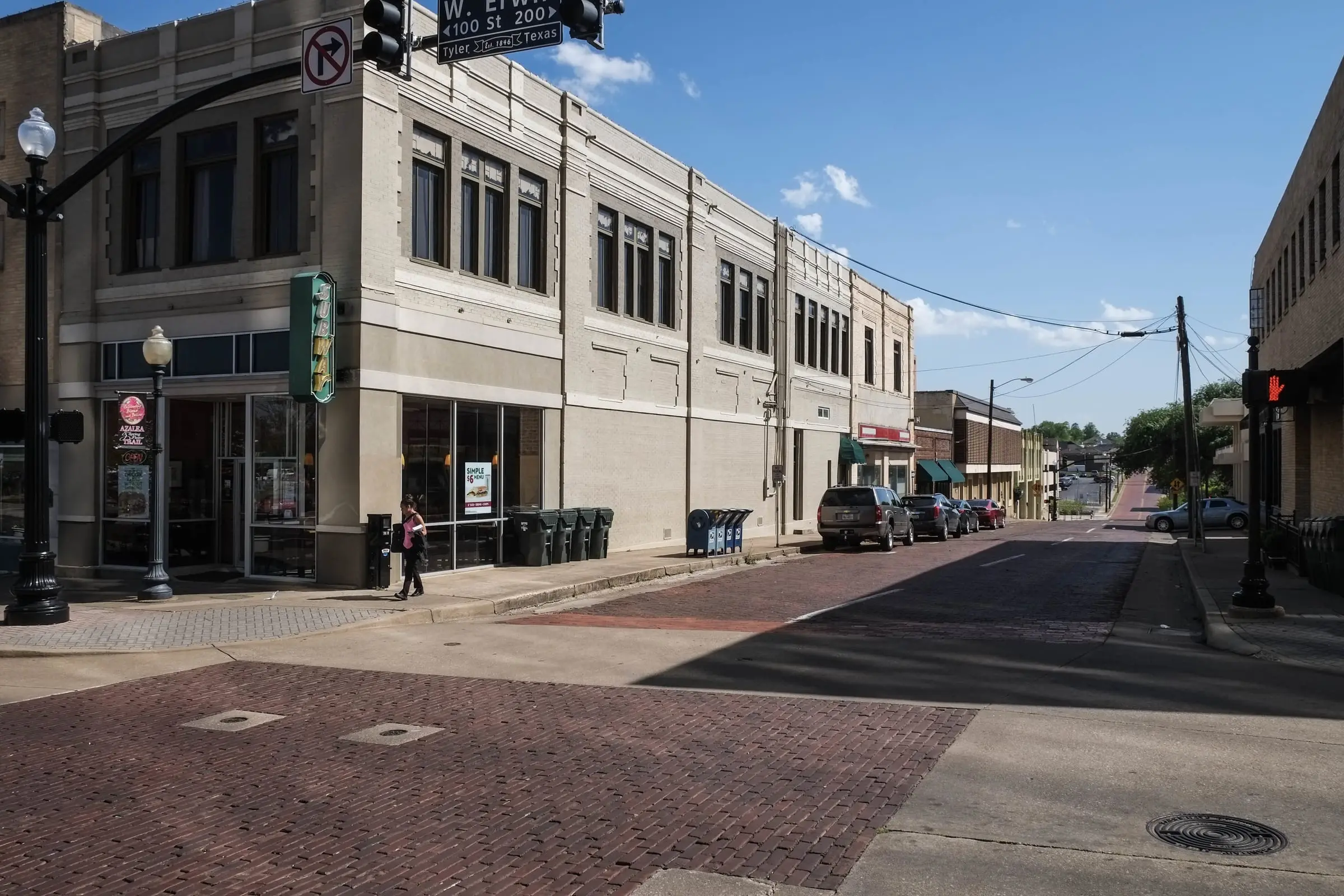
A downtown intersection paved in brick in front of a two-story commercial building, a street sign overhead.
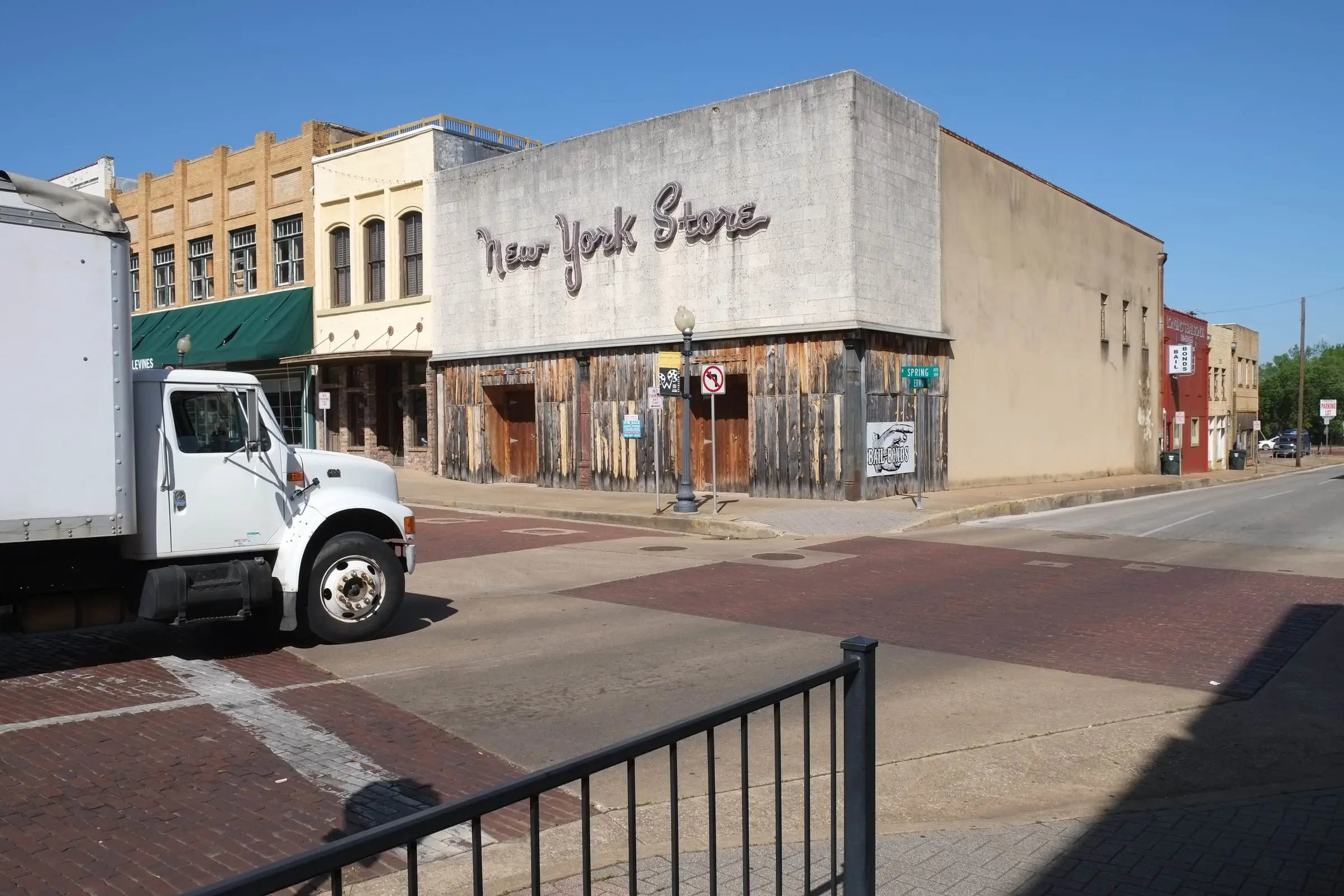
A brick-paved intersection in front of an old storefront lettered “New York Store,” a white truck at left.
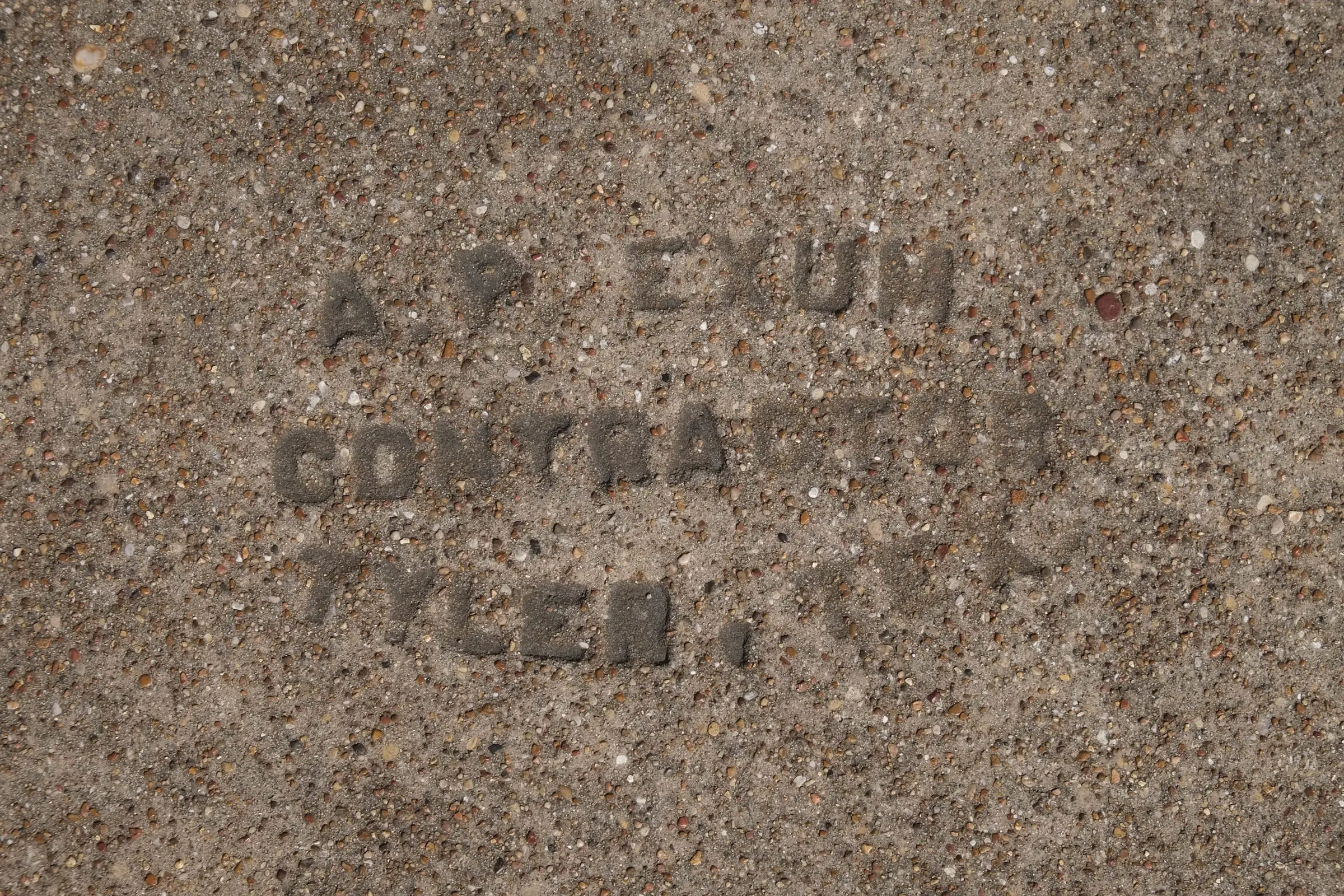
Letters pressed into a concrete sidewalk: “A. P. Exum, Contractor, Tyler, Tex.”
Tyler, 2016. The last frame is a contractor’s stamp in a concrete sidewalk, not a brick maker’s mark.Photographs: Paul Sableman, CC BY 2.0 (https://creativecommons.org/licenses/by/2.0/), via FlickrEvery picture on this site, and its rights

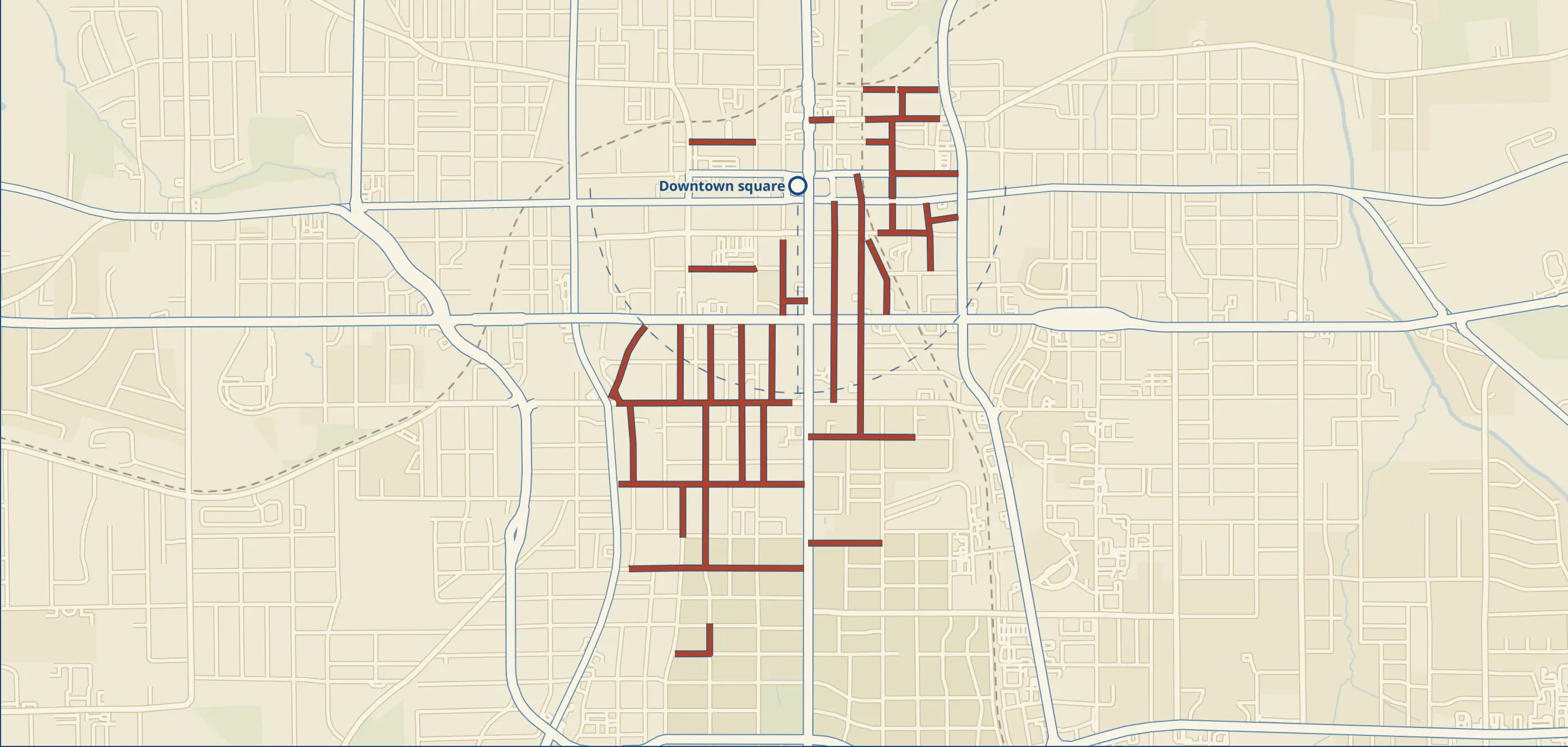
The brick streets on a map

Every street tagged brick in OpenStreetMap around downtown Tyler, on a map you can pan, zoom and search street by street.

Open the map

Notes

Every source is listed on Sources and methods.

  1. Note 1. As of 2015, the city counted nearly 14 miles (13.8) of brick streets made of about 12.6 million bricks, of three types no longer manufactured, so repairs draw on stockpiled bricks. Counts differ by year and source: about 20 miles of brick by about 1942 and about seven in 2000–03 (National Register documents), about 15 in 2013 (a city planner), 13 in 2023 (the city).

  2. Note 2. Because the old bricks are a finite resource, the city requires utility crews to lift them one by one and stack them for city workers to relay, and as of 2015 a dedicated three-person city crew repaired brick streets by hand.

  3. Note 3. Tyler's paving brick came from the Thurber Brick Co. and the Mineral Wells Brick Co., with some from the local Tyler Brick Co., which paving contracts saved from bankruptcy. The sources name the companies only: none we have verified describes maker’s marks on Tyler’s bricks, or how the streets were laid.

  4. Note 4. Thurber's brick plant in Erath County, about 75 miles west of Fort Worth, opened in 1897, began making vitrified paving brick in 1898, made only pavers by 1911, and closed around 1930–31. The closing date is approximate: sources give 1930 (the Handbook of Texas, Tarleton’s Gordon Center) or 1931 (the state marker, Tarleton’s Industrious Historian).

  5. Note 5. According to the National Register nomination, brick paving in Tyler began in 1906 with railroad crossings paved in red brick from Thurber, Texas; the streets around the courthouse followed in 1907, and Oakwood Street from Broadway to the depot in 1908. This is the National Register nomination’s account. Another account dates the first brick streets to around 1912, so the paving is dated here from the early 1900s into the 1940s, with no single start year.

  6. Note 6. Accounts of Tyler's brick streets disagree on the start: one puts the first brick streets at around 1912, while the National Register nomination dates brick paving to 1906. The two dates are not reconciled in the sources, so neither is given here as the start.

  7. Note 7. A 1925 bond added 15 streets to Tyler's brick paving, and brick paving continued through 1947.

  8. Note 8. The 2000 survey says about 20 miles of brick streets were completed up to about 1942, when World War II diverted funds and manpower, and that by then residents were no longer routinely choked by dust or mired in mud; the Tyler Morning Telegraph (2015), citing city data, says brick streets were installed through 1947.

  9. Note 9. In 2013, City of Tyler planner Heather Nick told KLTV that the brick streets were built 'predominantly by African American men,' and a city film shows the crews laying bricks assembly-line style in real time. The film is described only as showing assembly-line style work, not how the bricks were laid.

  10. Note 10. The Brick Streets Neighborhood Historic District, listed on the National Register in 2004, covers 29 blocks about half a mile south of Tyler's original town square, and all or part of 11 of its 14 streets keep their original red brick paving.

  11. Note 11. In September 2025, crews took up every brick on College Avenue between Ferguson and Erwin streets for the Downtown Improvement Project, palletized and stored them.

  12. Note 13. The Sanborn fire insurance map of Tyler dated September 1907 says on its first sheet: 'Grades generally level. streets not paved.' The 2000 National Register survey and the 2003 Brick Streets nomination say the streets around the courthouse square were paved in 1907, and the survey dates the first paving, at the railroad crossings, to July 2, 1906. The record does not reconcile them.

  13. Note 14. The Sanborn map of Tyler dated February 1912 says on its first sheet: 'About one mile of brick paved streets.' It fits neither start date cleanly: the 2000 survey dates the first paving to 1906 and the square to 1907, and city data reported in 2015 puts the first streets around 1912.

  14. Note 15. The Sanborn map of Tyler dated August 1919 says on its first sheet: 'Streets in business section mostly paved with brick and asphalt. Others are in fair condition.' City Manager V. W. Prater wrote in 1923 that only about 5 of Tyler’s 130 miles of street were paved.

  15. Note 16. The Sanborn map of Tyler dated March 1928 says on its first sheet '18½ MILES OF PAVING,' without naming the material. The figure counts all paving, not only brick. In 1923 the city manager counted about 5 paved miles.

  16. Note 17. The 1938 Sanborn atlas of Tyler says on its report page 'Paving:—About 37 miles,' without naming the material. The line is on the atlas’s report page, not sheet 1, and counts all paving, not only brick. The 2000 survey says about 20 miles of brick streets were completed by about 1942.